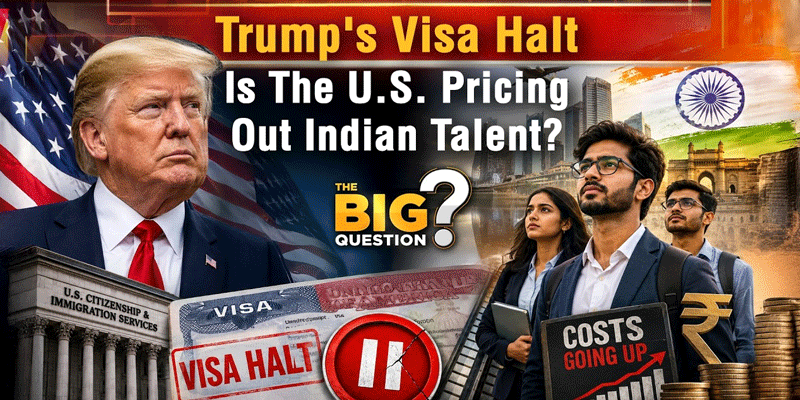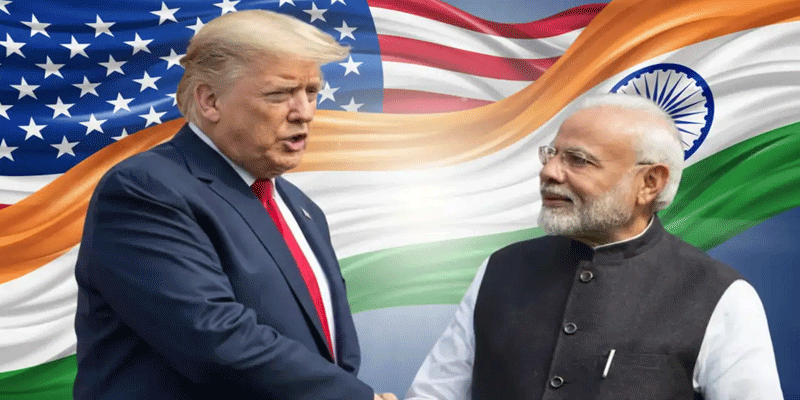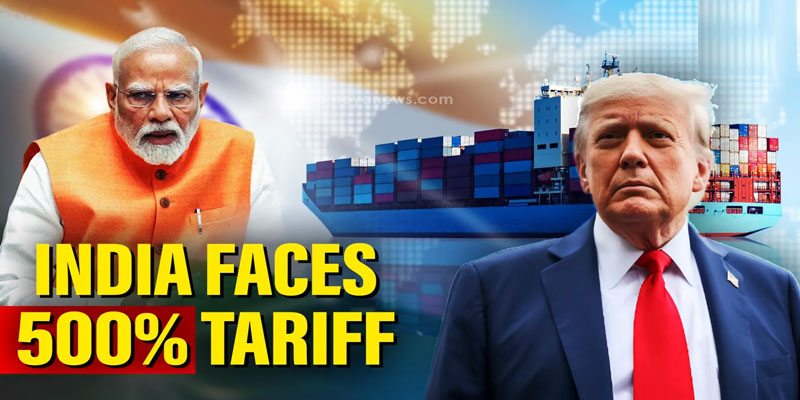
A sharp escalation in trade pressure is taking shape, with the United States signaling that tariffs as high as 500 percent on Indian exports could soon become a reality. The trigger is India’s continued purchase of Russian oil amid the Ukraine conflict. If implemented, such punitive duties would mark one of the most severe trade actions ever contemplated against a major strategic partner, carrying serious implications for India’s economy and energy security.
US Tariff Threat Linked to Russian Oil Purchases
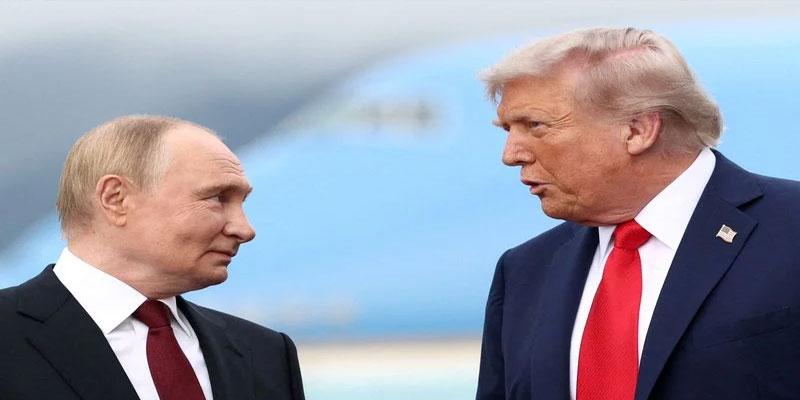
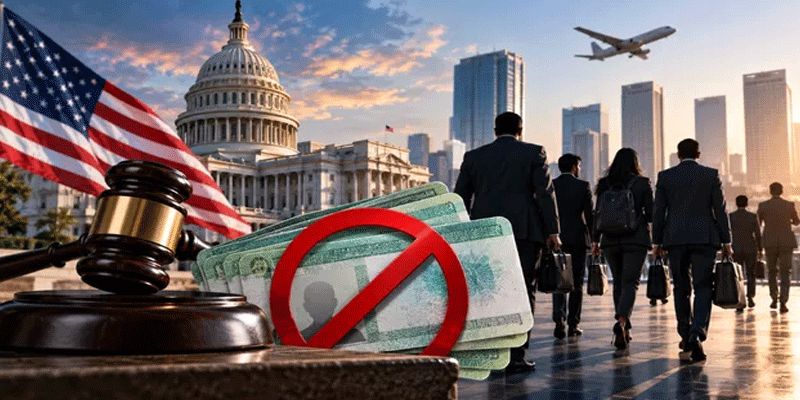
On January 6, 2026, US President Donald Trump approved the bipartisan Sanctioning Russia Act of 2025, granting the administration authority to levy extreme tariffs on countries that “knowingly” buy Russian oil or uranium. The legislation, sponsored by Senators Lindsey Graham and Richard Blumenthal, is explicitly designed to choke off revenues financing Moscow’s war in Ukraine.
India, China, and Brazil are directly named in the bill. While the tariffs are conditional—activated if Russia refuses peace talks, violates agreements, or escalates militarily—the political signal is unmistakable. The US has already imposed a 25 percent tariff on select Indian exports in 2025, following which India reduced Russian oil imports by nearly a fifth. However, the proposed escalation to 500 percent would be economically destabilising rather than symbolic.
Why India Turned to Russian Oil
After the Ukraine war disrupted global energy markets, India emerged as Russia’s largest crude buyer, capitalising on steep discounts of $10–20 per barrel. These purchases helped cushion India from global inflation, saving billions of dollars and protecting domestic fuel prices. At peak levels, Russian crude accounted for nearly 40 percent of India’s oil imports, though volumes have since moderated.
From Washington’s perspective, however, discounted oil flows are viewed as indirect financial support to Moscow. The Trump administration has framed the issue in moral and strategic terms, prioritising pressure on Russia even at the cost of straining ties with partners.
How 500% Tariffs Would Hit India’s Energy Import Costs
If such tariffs are enforced, India would be compelled to sharply curtail or abandon Russian oil purchases, currently estimated at around 1.2 million barrels per day. Replacement barrels would likely come from West Asia, Africa, or the US—sources priced closer to Brent benchmarks.
The immediate consequence would be a steep rise in import costs. Switching from discounted Russian crude to market-priced alternatives could raise per-barrel costs by $15–25. On an annual basis, this translates into an additional $9–11 billion on India’s crude import bill, assuming partial continuation of Russian supply. Over time, sustained tariffs could push this burden beyond $15 billion annually.
Higher crude costs would cascade through the economy. Refiners such as IOCL and BPCL would face margin pressure, forcing fuel price increases of ₹3–5 per litre. Inflation could rise by 0.5–1 percentage point, the current account deficit would widen, and energy-intensive sectors like fertilizers, petrochemicals, and transport would see profitability erode. Currency pressure could follow, with the rupee testing weaker levels against the dollar.
Strategic and Diplomatic Fallout
Beyond economics, the tariff threat complicates India’s strategic balancing. While China faces similar scrutiny, its larger trade leverage with the US has historically yielded flexibility. India, despite Quad membership and growing defence ties with Washington, appears more exposed. New Delhi may respond through diplomacy, WTO mechanisms, or by accelerating non-dollar trade arrangements and BRICS-based energy cooperation.
A Test of Strategic Autonomy
The prospect of 500 percent tariffs underscores the rising cost of strategic neutrality in a polarised world. For India, the challenge lies in preserving energy affordability without triggering a trade confrontation with its largest export market. Whether through negotiation, diversification, or structural energy reforms, New Delhi faces a defining test of its economic resilience and foreign policy autonomy.
(With agency inputs)